What’s New:
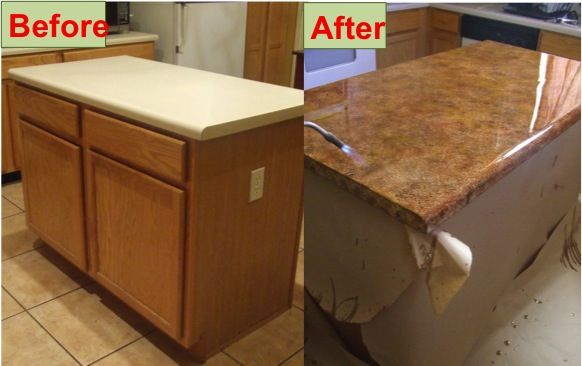
Formica is Not Granite and a Wine Cellar, Alas, is Just a Wine Cellar

Now, moving along to some factual fine-tuning of your price, you want to examine the worth of any upgrades you may have made to your property. While not all home improvements can be recouped, expect to recover some of the cost of the improvements you’ve made now. Understand though, that though you may have loved and enjoyed the $30K wine cellar you had installed, it will not have the same draw for buyers as a $30K luxury bath room. Along the way, however, you’ve no doubt made at least a few home improvements and now’s the time to sharpen your pencil and start adding up how much of the original cost of those projects you can now potentially recoup. If you’ve been smart enough to keep a file folder with proof of the price of your upgrades, that will help, but if not, there are many means to reconstructing them. You’ll want to get your arms around that number, because, depending on the upgrade you made, now’s the time to realize 60-80% of those costs.
Fine Tuning Your Price
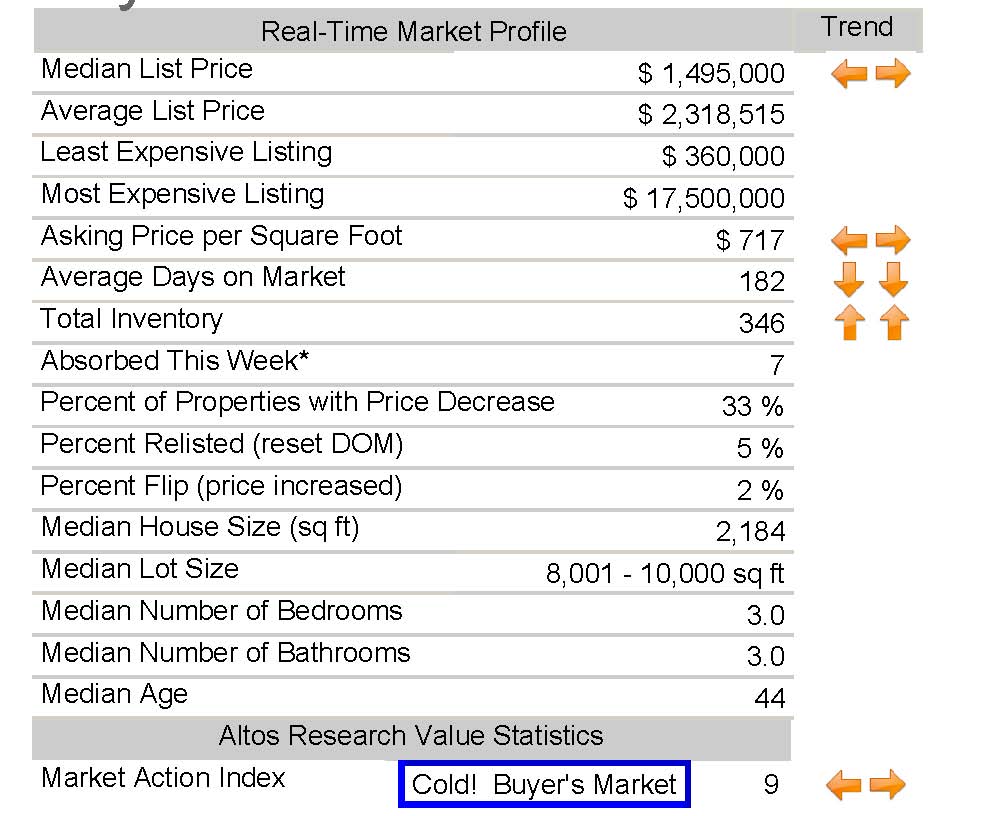
Okay, with your comps analysis in front of you, and given that your price should fall within 10% of those sold listings, let’s take a look at the other factors you need to evaluate in order to tweak your price to perfection.
First, since the majority of buyers begin their property searches online these days, you want to see what they see. With that in mind, head on over to one of the many real estate property value estimators like Zestimate on Zillow.com. The reason you need to look at this is that in every online lisiting, some version of a “Zestimate” price will appear next to your asking price. What that means is that right away, buyers will calculate the difference between what you think your house is worth and what a good real estate web site thinks its worth. No, they’ve never been inside your home and have no idea how much money you’ve put into it, but you need to know this number. While you’re there, also examine what the web site says the for your property are. Yes, some of these numbers will be off, but look at them anyway to get a sense of what you’ll be up against with potential buyers who have seen those numbers.
Expired and Withdrawn Listings Have a Story You Need To Hear
Next, you want to look at pending sales. These are the properties that have accepted offers and have gone to contract, but have yet to close. Real Estate agents will not always give up the sales price on their pending listings, but it never hurts to ask. Look hard at how long each of the pendings was on the market before receiving an acceptable offer and factor that into your pricing strategy as well.
Okay, you’ve got your true comps in hand, you’ve taken a hard look at the expired and withdrawn listings and you also know where other people’s asking prices are, now repeat after me: The only real price is a sold price! What this means is that you still have a lot of factors to consider before arriving at your final asking price and the least of your considerations should be other people’s asking prices. You know, for instance, that every retirement planning guide will factor in the value of your home, but you also know that many people list their homes at unrealistic prices to make up for the short fall in their retirement savings. And, yes, it would be nice to get a year’s private school tuition above the price of your next home, but can you afford to take the losses if your property lingers? So, make up your mind now to set a realistic price for your property based on the facts you have that matter. And chief among those facts is the price that comparable properties sold for.
Expired and Withdrawn Listings Have a Story You Need To Hear
 While you’re looking at the sales prices of true comps for your own home, also look at the withdrawn and expired listings in your market. Never make the mistake of saying, “If they’re not on the market, they don’t count,” because expired and withdrawn listings can tell you a lot about what’s real as far as prices are concerned. Do the homes that haven’t sold have any common attributes? Are they all in the same building, for example? Or are they all on a well system instead of city or town water? There are many hidden factors which affect home sales and analyzing the unsold comps in your market can give you many clues to what not to do. Finally, listings that came on the market overpriced will be a huge share of the unsold and expired group, so pay close attention to what those properties do and do not have going for them. Bottom line, the unsolds and expireds failed to bring the buyer and you want to be successful, so learn everything you can from the mistakes made by others.
Next, you want to look at pending sales. These are the properties that have accepted offers and have gone to contract, but have yet to close. Real Estate agents will not always give up the sales price on their pending listings, but it never hurts to ask. Look hard at how long each of the pendings was on the market before receiving an acceptable offer and factor that into your pricing strategy as well.
How to Price Your Home to Sell

The first thing you need is a great real estate agent who will put together a CMA (Comparative Market Analysis) for your property. Simply stated, the CMA brings together the recent sales in your area along with the number of days it took each of those listings to sell. Ideally, your CMA should list only those properties within a ¼ to a ½ mile from your home (this may differ in major cities, where, for example, two blocks North of 96th Street in New York is an entirely different property than one two blocks south).
You will also want to be sure that you are getting a true “apples to apples” comparison. For instance, if your home is a 100 year old Dutch Colonial in desperate need of updating, it is not a true comp for a house half a block away that was built in the late 1980s. Similarly, if your three bedroom home has two baths, but the three bedroom a block away has 3.5, then that house is not a “true comp” for your own.
You will then need to compare lot sizes and square footage among the comparable listings in your area and adjust your price up or down accordingly. It could be that your Dutch Colonial actually has another 400 square feet of usable space, because the 80’s McMansion has a cathedral ceiling in the entrance hall killing a lot of usable space.
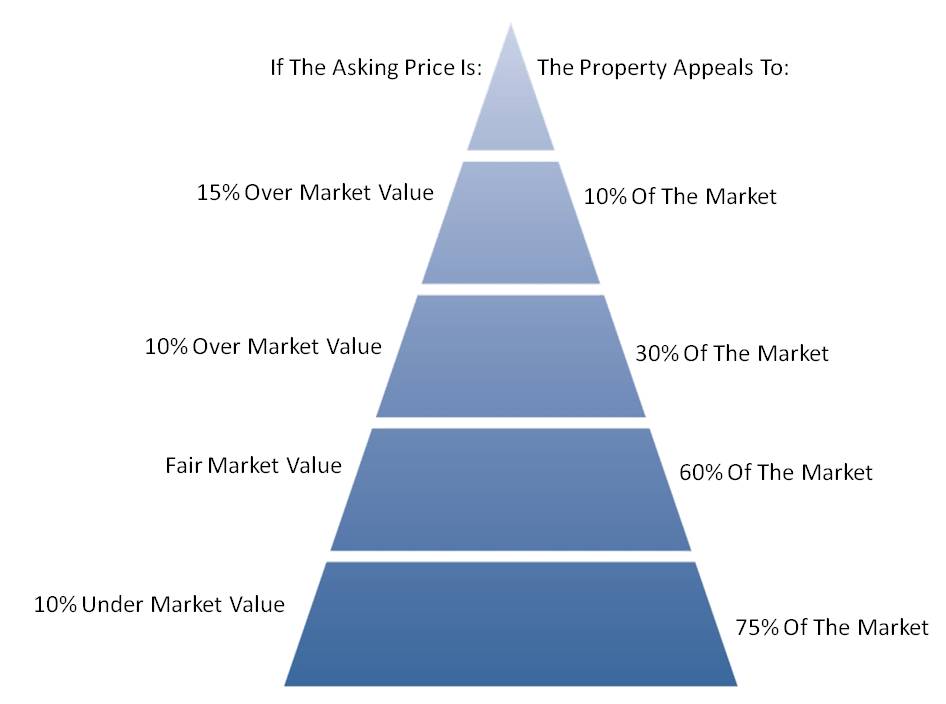
The other numbers you want to look at are the price reductions for each property. When properties linger unsold for a long time, you will probably find quite a few price adjustments and this should spur you on to make sure your property is priced to sell the first time. Even if you can say, “Hey, I’ve got time. Let’s price it higher,” with the possible exception of a real estate market where property values are appreciating, time is usually not on your side and you could end up costing yourself a lot of money. Even in a neutral market, overpricing will simply lead to your home sitting on the market going nowhere. Far better then, to price it in today’s dollars and watch it get snatched off the market.
Lesson # 1: The Only Real Price is a Sold Price
As you evaluate where to price your home, you’re going to spend a fair amount of time looking at prices of homes comparable to your own. Basically, you will be evaluating the following:
-
Past Sales – Studying the prices of comparable homes that have sold in your area;
-
Active Listings – The prices that others with comparable homes are asking for their homes;
-
Expired and Withdrawn Listings – The prices of homes that have not sold.


 Cono N. Natale