Author: Cono Natale

Location: 2 of 3

download

Other, less tangible factors that might differentiate your property price-wise abound. Look at the features that are the most attractive to potential buyers. Does your home feature tons of closet space? Offer all new, high-end kitchen appliances? Do you have central air, while the comps only have wall units? Is your home gas heated, while the comps are baseboard electric? Buyers will note all these costs of running and maintaining their next home as they look at your property so, again, learn to see your property with a buyer’s eyes. This may even be a time to make some quick, but cost-effective improvements, like removing dated wallpaper and replacing it with neutral paint, taking down heavy window treatments and replacing them with attractive blinds to open up the space, or converting an extra room to a home office, since home offices are much in demand. Even relatively minor tweaks to your property like these can increase the initial offers you receive. When you’ve spent a few hours or even weekend thinking like a buyer, you’ll be in a much better position to appraise the actual value of the improvements you’ve made with a cool head.
Location: 1 of 3

images

You’ve heard it forever and it’s true, “Location, location, location!” Be sure to factor the following location-related features into your prices. Are you on a higher floor, which is more desirable? Does the one block difference between your address and that of one of your comps put you in a better school district? (In some major cities, different sides of the same street can be in different school districts, so do your homework!) Do you have water views or over look the park? And, finally, is your property easily accessible? Are thruway entrances nearby if you commute? Are subway entrances nearby? All of these location-related features can up your price.


Go Shopping For Your House

40968202393719f389977f428f6b1ed0

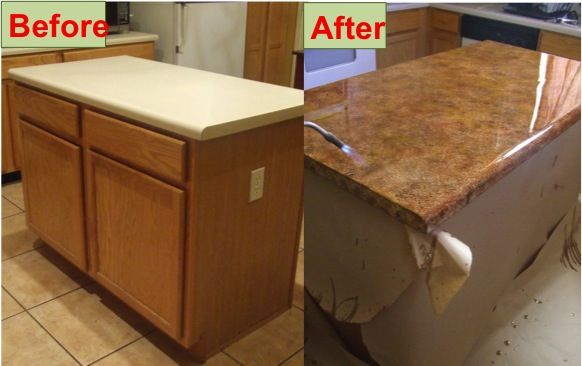
You may also want to consider taking the time for a boots on the ground approach to this process, by putting on your buyer’s shoes and going out to look at properties in your price range.  Pay attention to what your potential buyer can get for the price.  Be sure to note what the fine points of a property are—whether it’s a level, landscaped lot or a luxury bath and adjust your own home’s price accordingly.  If the neighbors broke the bank for granite countertops and you’re still wiping down Formica, adjust for it.  But if you have all energy-efficient appliances or a tank-less water heater, now’s the time for a price bump.  Just remember as you go that anything beyond that 10% differential from your list of true comps has really got to be justified!

Formica is Not Granite and a Wine Cellar, Alas, is Just a Wine Cellar

wine4

Now, moving along to some factual fine-tuning of your price, you want to examine the worth of any upgrades you may have made to your property.  While not all home improvements can be recouped, expect to recover some of the cost of the improvements you’ve made now.  Understand though, that though you may have loved and enjoyed the $30K wine cellar you had installed, it will not have the same draw for buyers as a $30K luxury bath room. Along the way, however, you’ve no doubt made at least a few home improvements and now’s the time to sharpen your pencil and start adding up how much of the original cost of those projects you can now potentially recoup.  If you’ve been smart enough to keep a file folder with proof of the price of your upgrades, that will help, but if not, there are many means to reconstructing them.  You’ll want to get your arms around that number, because, depending on the upgrade you made, now’s the time to realize 60-80% of those costs.

Fine Tuning Your Price

july1-carmel-overall-profile11

Okay, with your comps analysis in front of you, and given that your price should fall within 10% of those sold listings, let’s take a look at the other factors you need to evaluate in order to tweak your price to perfection.

First, since the majority of buyers begin their property searches online these days, you want to see what they see. With that in mind, head on over to one of the many real estate property value estimators like Zestimate on Zillow.com.  The reason you need to look at this is that in every online lisiting, some version of a “Zestimate” price will appear next to your asking price.  What that means is that right away, buyers will calculate the difference between what you think your house is worth and what a good real estate web site thinks its worth.  No, they’ve never been inside your home and have no idea how much money you’ve put into it, but you need to know this number.  While you’re there, also examine what the web site says the  for your property are.  Yes, some of these numbers will be off, but look at them anyway to get a sense of what you’ll be up against with potential buyers who have seen those numbers.